
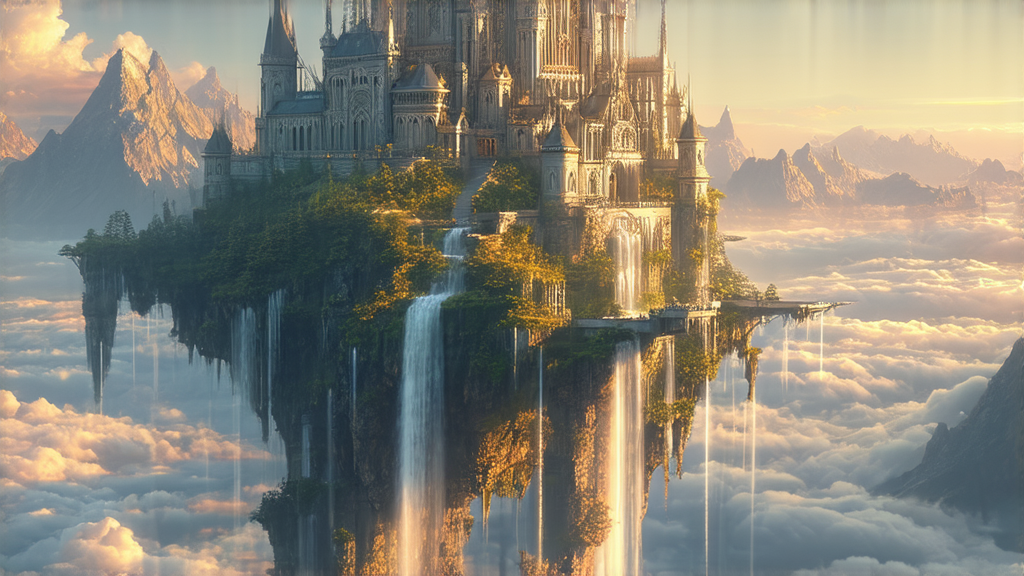
Final image
This example uses a fantasy castle prompt designed to create a large, cinematic scene. The image combines a floating island, a detailed castle, waterfalls, clouds, mountains, and warm sunset lighting.
Prompt used
The prompt was written to keep the idea clear while still giving the image model enough visual direction. It starts with the main subject, then adds setting, environmental details, lighting, mood, and style.
a fantasy castle on a floating island above the clouds, waterfalls falling from the island, distant mountains, sunset lighting, warm golden sky, cinematic atmosphere, high detail, fantasy concept art
Generation settings
The image was created with a wide aspect ratio because the prompt describes a large environment. A horizontal frame gives more room for the castle, the floating island, the mountains, and the surrounding clouds.
| Aspect ratio | 16:9 |
|---|---|
| Resolution | Standard |
| Steps | 30 |
| User negative prompt | None |
| Basic quality guidance | Automatically applied |
| Style direction | Fantasy concept art, cinematic atmosphere, high detail |
This example uses the Standard resolution setting with 30 steps. The goal was to create a clear, detailed fantasy scene while keeping the settings simple enough for beginners to understand and reuse.
No custom negative prompt was entered for this example. Kuvagen still applies a small set of basic quality guidance in the background to help reduce common issues such as blurry results, watermarks, unwanted text, or very low-quality output.
Automatically applied basic negative guidance:
        low quality, worst quality, blurry, watermark, text
This keeps the example beginner-friendly: the main creative direction comes from the positive prompt, while the automatic quality guidance quietly helps avoid common visual problems.
Prompt breakdown
A good image prompt is easier to understand when you separate it into parts. In this example, each phrase has a specific role.
“a fantasy castle” tells the model what the image should focus on. This gives the scene a clear central subject.
“on a floating island above the clouds” creates the fantasy environment and explains where the castle exists.
“waterfalls falling from the island” adds motion and visual interest to the floating island.
“distant mountains” gives the image depth and makes the world feel larger.
“sunset lighting” and “warm golden sky” create the glowing color and peaceful fantasy mood.
“cinematic atmosphere,” “high detail,” and “fantasy concept art” guide the final look and presentation.
Why this prompt works
This prompt works because it is specific without becoming too crowded. It does not only say “fantasy castle.” It explains where the castle is, what surrounds it, what kind of lighting is used, and what visual style should guide the image.
The strongest part of the prompt is the combination of “floating island,” “above the clouds,” and “waterfalls falling from the island.” These phrases create a clear fantasy concept that is easy for the model to visualize. The sunset lighting then gives the scene a warm and cinematic feeling.
Why 16:9 works well here
A wide 16:9 aspect ratio is a good match for this prompt because the image is not only about one object. It is about a full scene. The castle, island, waterfalls, clouds, mountains, and sky all need space.
If this image were generated in a square format, the castle might become more centered and the surrounding environment might feel smaller. If it were generated in a portrait format, the castle could feel taller and more dramatic, but the wide mountain background might be reduced.
Why sunset lighting was used
Sunset lighting helps the image feel warm, magical, and cinematic. It also creates strong contrast between the bright sky, the castle, and the clouds below.
In fantasy images, lighting words are especially important because they control the emotional tone. “Sunset lighting” and “warm golden sky” make the scene feel inviting and grand, rather than dark or threatening.
Lighting phrase:
sunset lighting, warm golden sky

Effect:
warm color, cinematic mood, magical atmosphere, stronger depth
Prompt variations to try
Once the basic prompt works, you can create variations by changing only one or two parts. This is a good way to explore different moods while keeping the same main subject.
Darker fantasy version
a fantasy castle on a floating island above storm clouds, waterfalls falling from the island, distant mountains, moonlight, dark blue sky, mysterious atmosphere, high detail, fantasy concept art
Dreamier version
a fantasy castle on a floating island above the clouds, glowing waterfalls, magical particles in the air, distant mountains, sunset lighting, dreamy atmosphere, soft golden sky, fantasy concept art
More realistic version
a realistic fantasy castle on a floating island above the clouds, waterfalls falling from the island, distant mountains, sunset lighting, warm golden sky, cinematic landscape, detailed stone architecture
Tips for writing similar prompts
When writing a fantasy environment prompt, start with the main subject and then build the world around it. A useful structure is:
main subject + unusual setting + environmental detail + background + lighting + mood + style
For example, instead of writing only “a fantasy castle,” add where it is and what makes the scene visually special. A floating island, waterfall, cloud layer, mountain range, glowing sky, or dramatic atmosphere can all make the image stronger.
Final thoughts
This example shows how a clear prompt can create a strong fantasy image without needing a very long list of instructions. The key is to choose words that each have a purpose.
For this image, the most important words are “fantasy castle,” “floating island,” “above the clouds,” “waterfalls,” and “sunset lighting.” Together, they create a scene that feels large, magical, and easy to understand.